Ingredients
Equipment
Method
- Toast the Pine Nuts: Add the pine nuts to a dry skillet over medium heat and toast for 3–5 minutes, shaking the pan often, until they're golden and smell nutty. Watch them closely — they go from perfect to burnt fast. Slide them onto a plate to cool so they stop cooking. (WATCH VIDEO BELOW)
- Shred the Parmesan First: Cut the parmesan into rough cubes and add it to the food processor on its own. Blitz until it breaks down into fine crumbs. This is my favourite little trick — doing the cheese first means it disappears into the sauce instead of leaving chunks. (WATCH VIDEO BELOW)
- Add Everything Else: Add the toasted pine nuts, fresh basil, garlic cloves, lemon juice, salt, and half of the olive oil to the processor with the parmesan. Pulse a few times to break the basil down.
- Stream in the Rest of the Oil: With the processor running, slowly pour in the remaining olive oil through the feed tube. Take your time here — streaming it in is what emulsifies the sauce and gives you that creamy, glossy texture instead of an oily one. (WATCH VIDEO BELOW)
- Taste and Season: Stop, scrape down the sides, and taste. Add salt a pinch at a time — you really don't need much, the parmesan and lemon are already doing a lot of the heavy lifting on saltiness and acidity. Add a splash more olive oil if you want it looser.
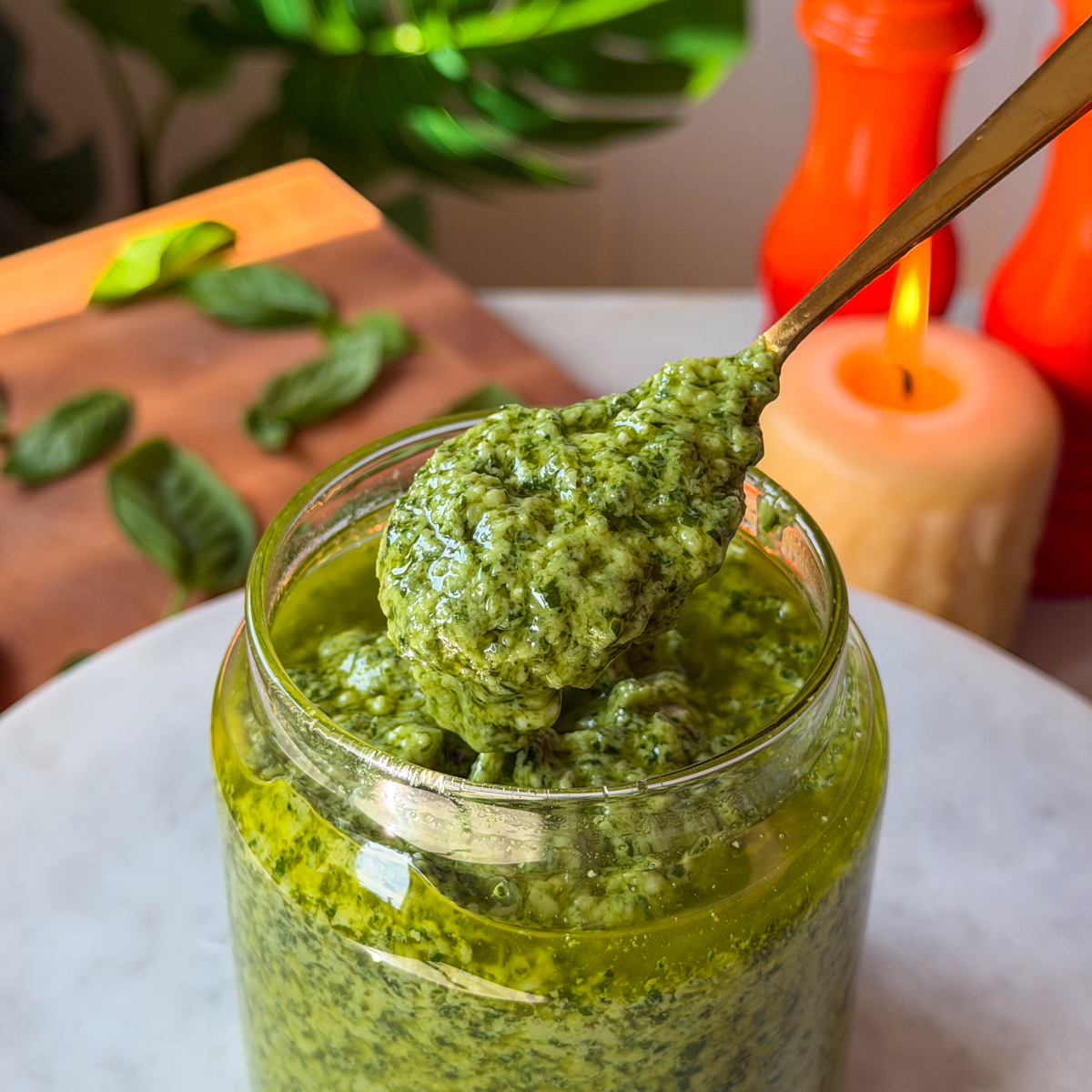
- Serve or Store: Use it right away, or transfer to a jar and press a thin layer of olive oil over the top before sealing.
Dry your basil really, really well. Wet basil waters down the sauce and stops the oil from emulsifying properly. A salad spinner is ideal, but patting the leaves between two clean towels works just fine.
Shred the parmesan first, on its own. Cube it, blitz it solo until it's fine crumbs, then add everything else. Pre-shredded parmesan from the bag is coated in anti-caking powder and never fully melts into the sauce.
Stream the oil in — don't dump it. This is the tip I learned the hard way. Adding half the oil upfront and streaming the rest in while the processor runs is what turns a loose, oily mixture into a creamy emulsified sauce. Same ingredients, completely different result.
Notes
Storage
- Fridge: Up to 5–7 days in an airtight glass jar. Press the pesto flat and pour a thin layer of olive oil over the surface — air is what turns it brown, so sealing it off keeps it bright green.
- Reheat: Pesto isn't really reheated, it's warmed. Never boil it or cook it in a hot pan — the basil goes bitter and the parmesan can split. Instead, take the pasta off the heat, add the pesto, and loosen it with a splash of reserved starchy pasta water until it coats everything glossily.
- Freezer: Up to 3 months — this is exactly what I do with my end-of-summer basil batch. Freeze in ice cube trays, then pop the cubes into a freezer bag. Thaw in the fridge overnight or drop a frozen cube straight into hot (not boiling) pasta. If you're planning to freeze it, leave the parmesan out and stir it in fresh after thawing — it freezes better that way.