
This is the only pesto sauce recipe I make anymore — bright green, garlicky, packed with fresh basil and real parmesan, and it comes together in 10 minutes in one food processor. No jar. No weird oils. Just seven ingredients and a blender that does all the work for you.
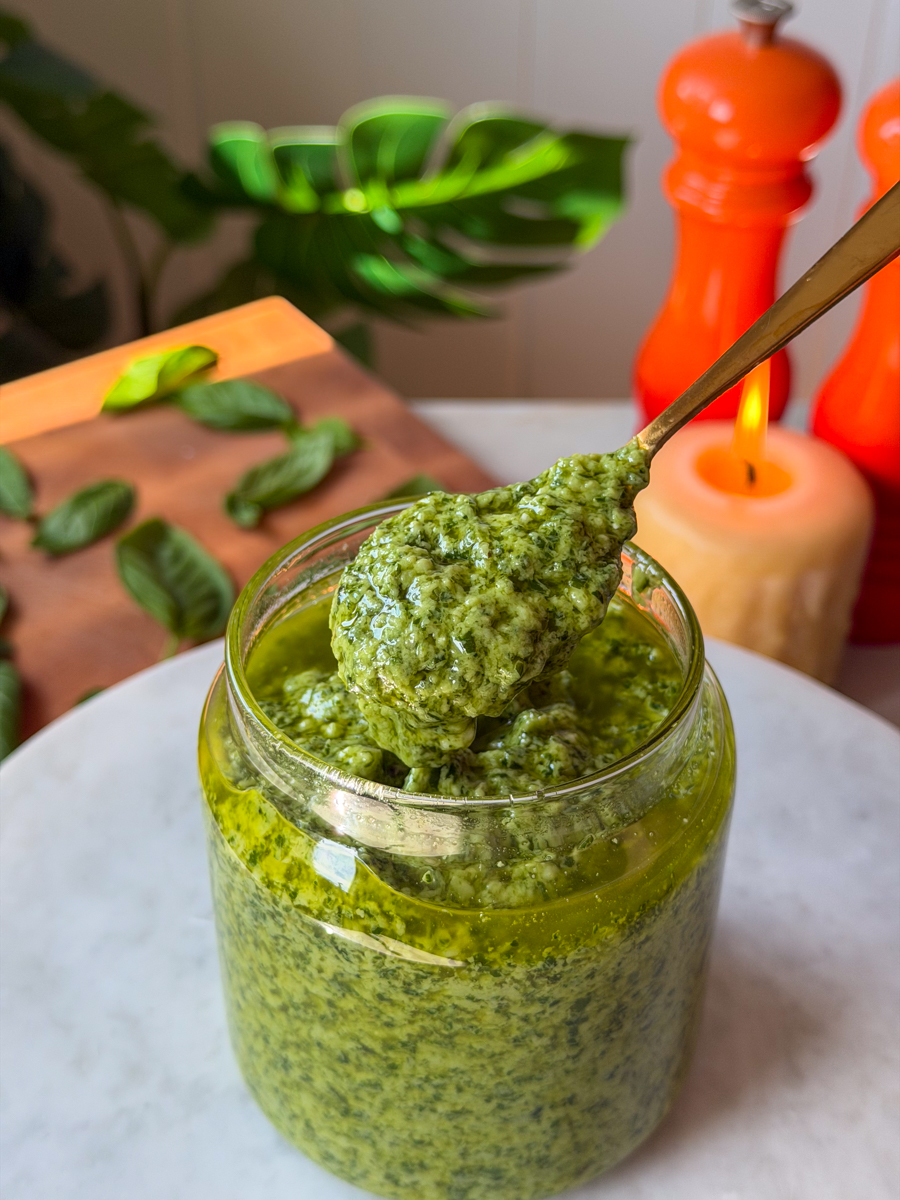
I tested this a few times before I landed on the ratio, and the thing that changed everything was how I add the olive oil. I used to dump it all in at once and end up with pesto that tasted a little bitter and looked kind of dull. Now I add half the olive oil with everything else, then stream in the rest slowly while the processor is running — and the sauce comes out creamy, emulsified, and so much smoother. That one change is the whole recipe.
The other trick? I cube the parmesan and shred it in the food processor first, before anything else goes in. It grinds down into these fine little crumbs that melt right into the sauce instead of sitting in it as chunks. It takes 20 extra seconds and it makes the texture so much better.
Honestly, this recipe started as a way to use things up. Every year at the end of summer I end up with way more fresh basil than I know what to do with, and this is what I always make with it — every single time. There's something about turning a pile of leftover basil into a jar of bright green sauce that feels like you got away with something.
If you love a good sauce that does a lot of work for you, you'll also want my Creamy Chicken Garlic Parmesan Pasta, and my creamy pesto pasta — and this pesto is incredible spooned over my chicken schnitzel!
Jump to:
Instructions & Video
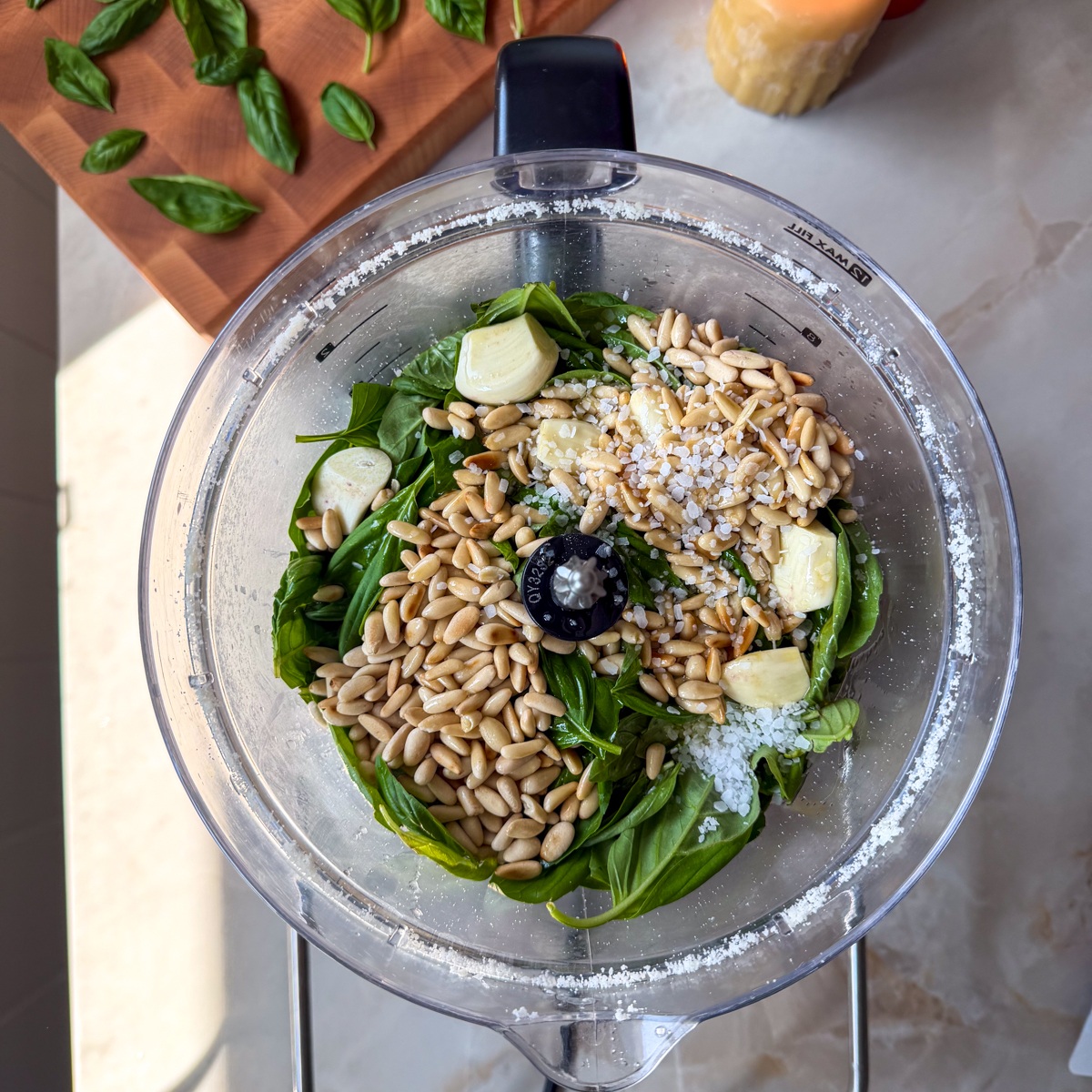
- Step 1: Add everything to a food processor & blend!
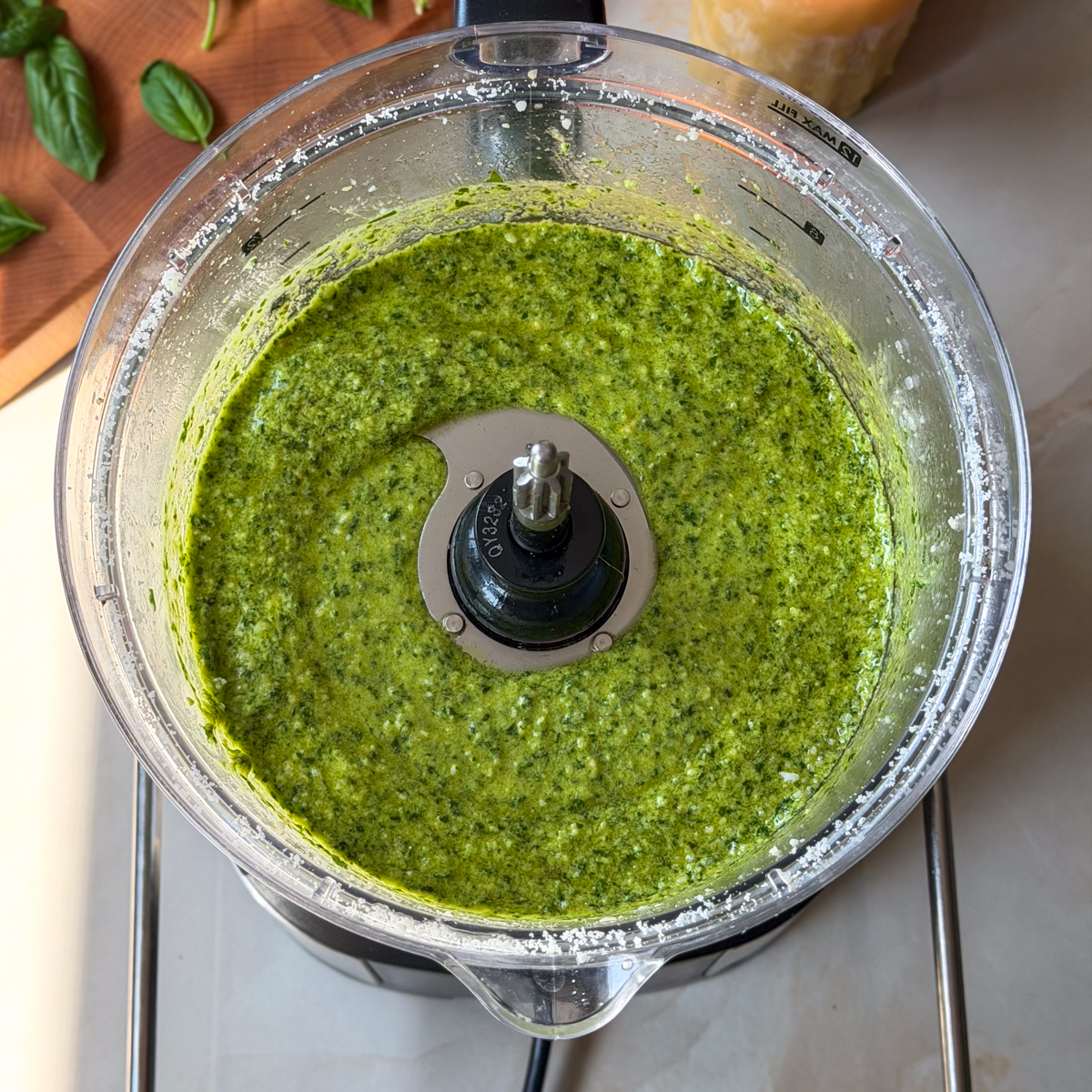
- Step 2: Slowly add in & emulsify the olive oil!
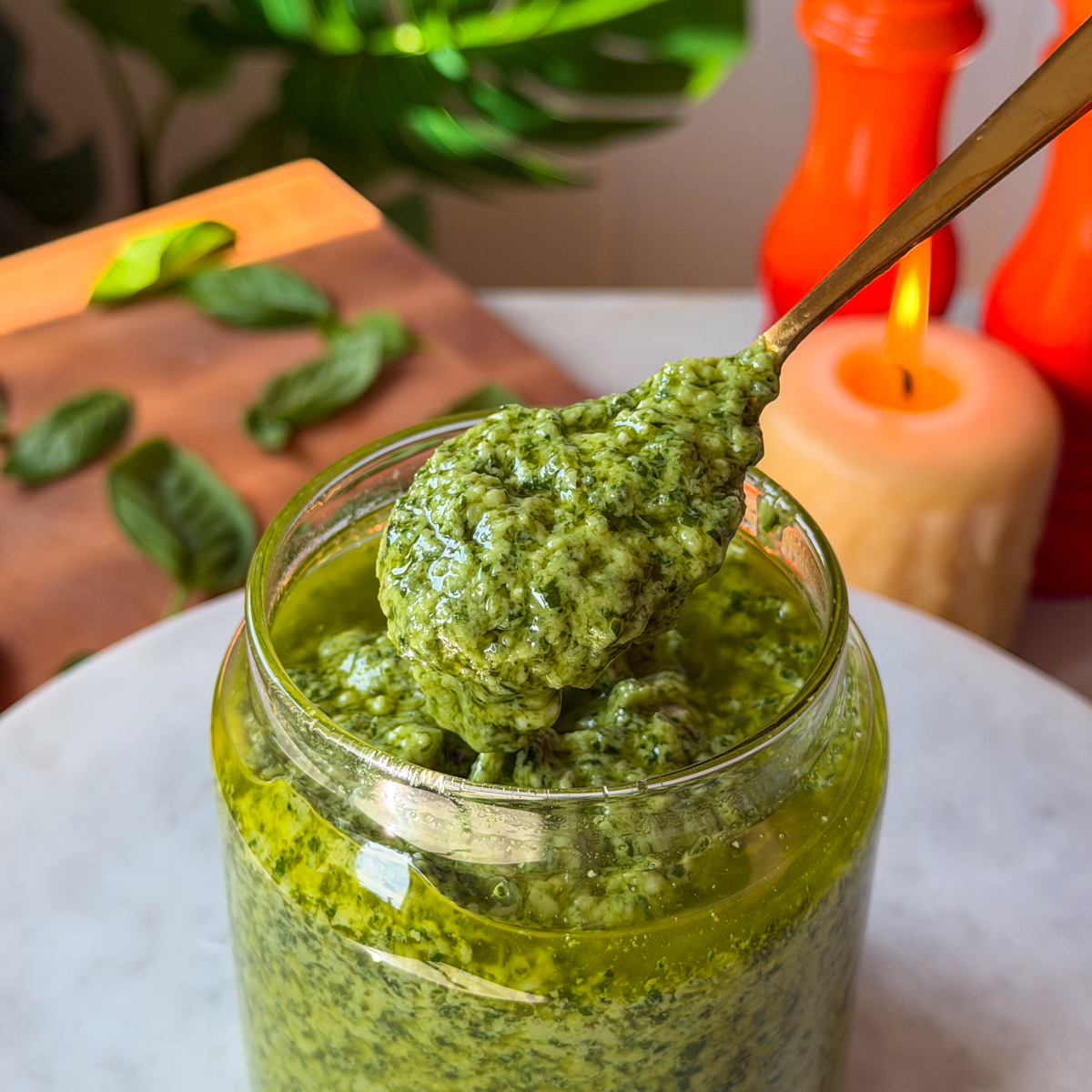
Easy Pesto Sauce Recipe (10-Minute Homemade Pesto)
Ingredients
Equipment
Method
- Toast the Pine Nuts: Add the pine nuts to a dry skillet over medium heat and toast for 3–5 minutes, shaking the pan often, until they're golden and smell nutty. Watch them closely — they go from perfect to burnt fast. Slide them onto a plate to cool so they stop cooking. (WATCH VIDEO BELOW)
- Shred the Parmesan First: Cut the parmesan into rough cubes and add it to the food processor on its own. Blitz until it breaks down into fine crumbs. This is my favourite little trick — doing the cheese first means it disappears into the sauce instead of leaving chunks. (WATCH VIDEO BELOW)
- Add Everything Else: Add the toasted pine nuts, fresh basil, garlic cloves, lemon juice, salt, and half of the olive oil to the processor with the parmesan. Pulse a few times to break the basil down.
- Stream in the Rest of the Oil: With the processor running, slowly pour in the remaining olive oil through the feed tube. Take your time here — streaming it in is what emulsifies the sauce and gives you that creamy, glossy texture instead of an oily one. (WATCH VIDEO BELOW)
- Taste and Season: Stop, scrape down the sides, and taste. Add salt a pinch at a time — you really don't need much, the parmesan and lemon are already doing a lot of the heavy lifting on saltiness and acidity. Add a splash more olive oil if you want it looser.
- Serve or Store: Use it right away, or transfer to a jar and press a thin layer of olive oil over the top before sealing.
Notes
Storage
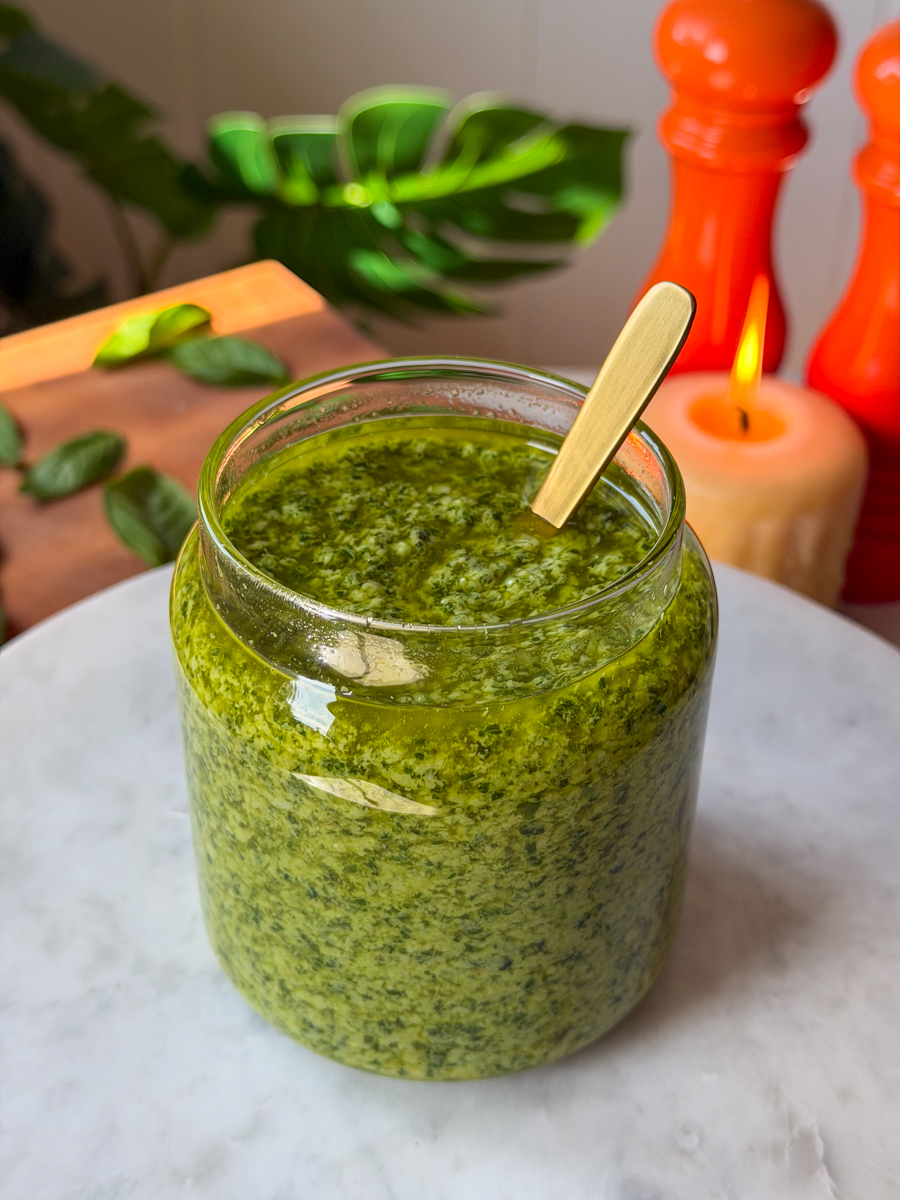
- Fridge: Up to 5–7 days in an airtight glass jar. Press the pesto flat and pour a thin layer of olive oil over the surface — air is what turns it brown, so sealing it off keeps it bright green.
- Reheat: Pesto isn't really reheated, it's warmed. Never boil it or cook it in a hot pan — the basil goes bitter and the parmesan can split. Instead, take the pasta off the heat, add the pesto, and loosen it with a splash of reserved starchy pasta water until it coats everything glossily.
- Freezer: Up to 3 months — this is exactly what I do with my end-of-summer basil batch. Freeze in ice cube trays, then pop the cubes into a freezer bag. Thaw in the fridge overnight or drop a frozen cube straight into hot (not boiling) pasta. If you're planning to freeze it, leave the parmesan out and stir it in fresh after thawing — it freezes better that way.
Tried this recipe?
Let us know how it was!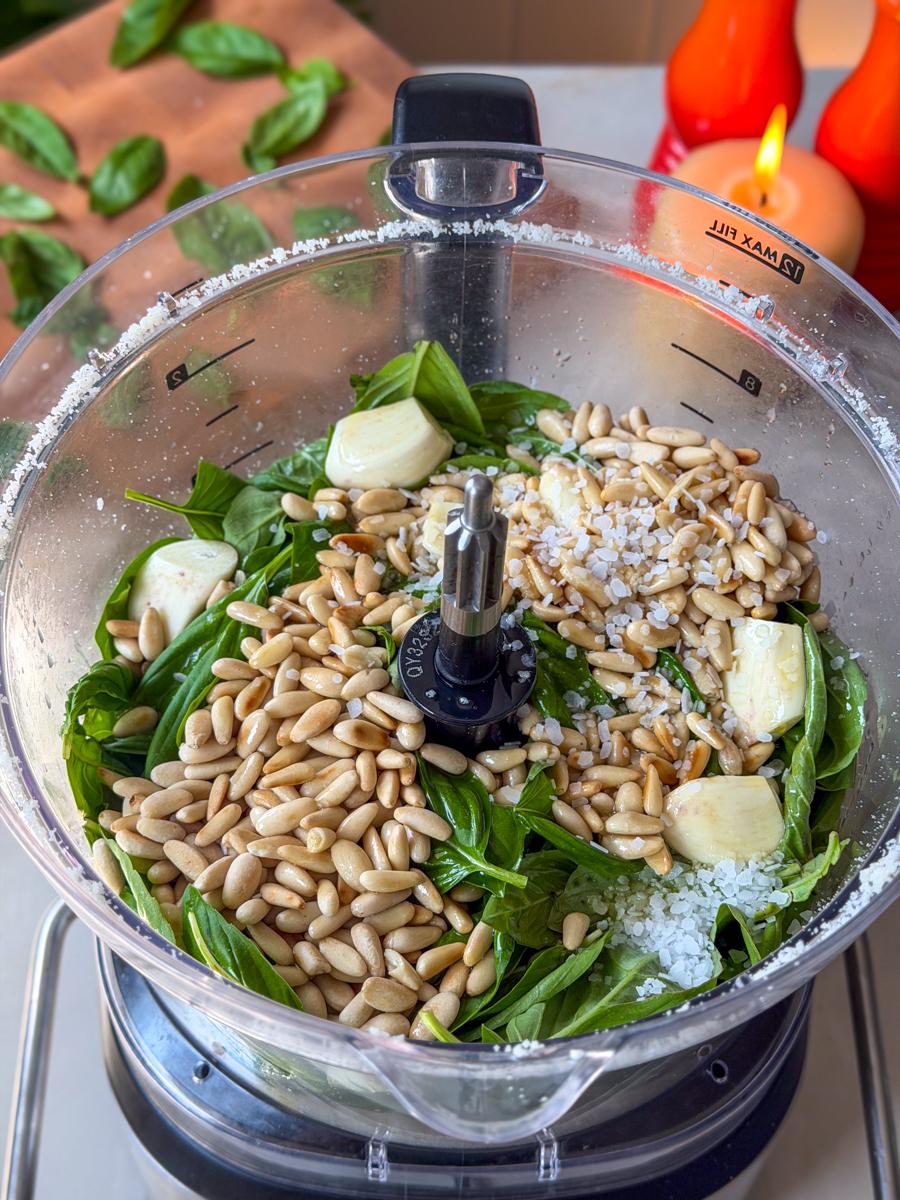
Substitutions
- Pine nuts: walnuts, pistachios, blanched almonds or pumpkin seeds — toast them the same way. Walnuts are the closest in richness and way cheaper.
- Parmesan: Pecorino Romano for a sharper, saltier bite. Grana Padano works too and costs less.
- Dairy-free: swap the parmesan for ½ cup nutritional yeast plus an extra pinch of salt. It won't be identical, but it's genuinely good.
- Nut-free: use toasted sunflower seeds or pumpkin seeds — same quantity, same method.
- Fresh basil: half basil, half baby spinach or arugula. Spinach keeps it mild and green, arugula gives it a peppery kick.
- Lemon juice: a splash of white wine vinegar works, but use about half as much.
- Olive oil: avocado oil for a more neutral flavour. Skip anything with a strong taste of its own.
- Garlic: roasted garlic cloves if raw garlic is too sharp for you — mellow, sweet, and lovely.
- Salt: if you're using Pecorino, cut the salt to ½ teaspoon and taste from there.
Frequently asked questions
How do I keep pesto sauce from turning brown? Cover the surface with a thin layer of olive oil and store it in an airtight container — air exposure is what causes the browning. The lemon juice in this recipe helps too, and if you want it to stay vivid green for days, you can blanch the basil leaves for 15 seconds and shock them in ice water before blending.
Can I make pesto sauce without a food processor? Yes — a blender works, and so does the traditional mortar and pestle. With a blender you'll need to stop and scrape the sides more often, and you may need a splash more olive oil to get things moving. A mortar and pestle takes longer but gives you a beautifully textured, old-school pesto.
Can I freeze pesto sauce? Yes, pesto freezes beautifully for up to 3 months. Portion it into an ice cube tray, freeze until solid, then transfer the cubes to a freezer bag. For the best texture, leave the parmesan out before freezing and stir it in fresh after thawing.
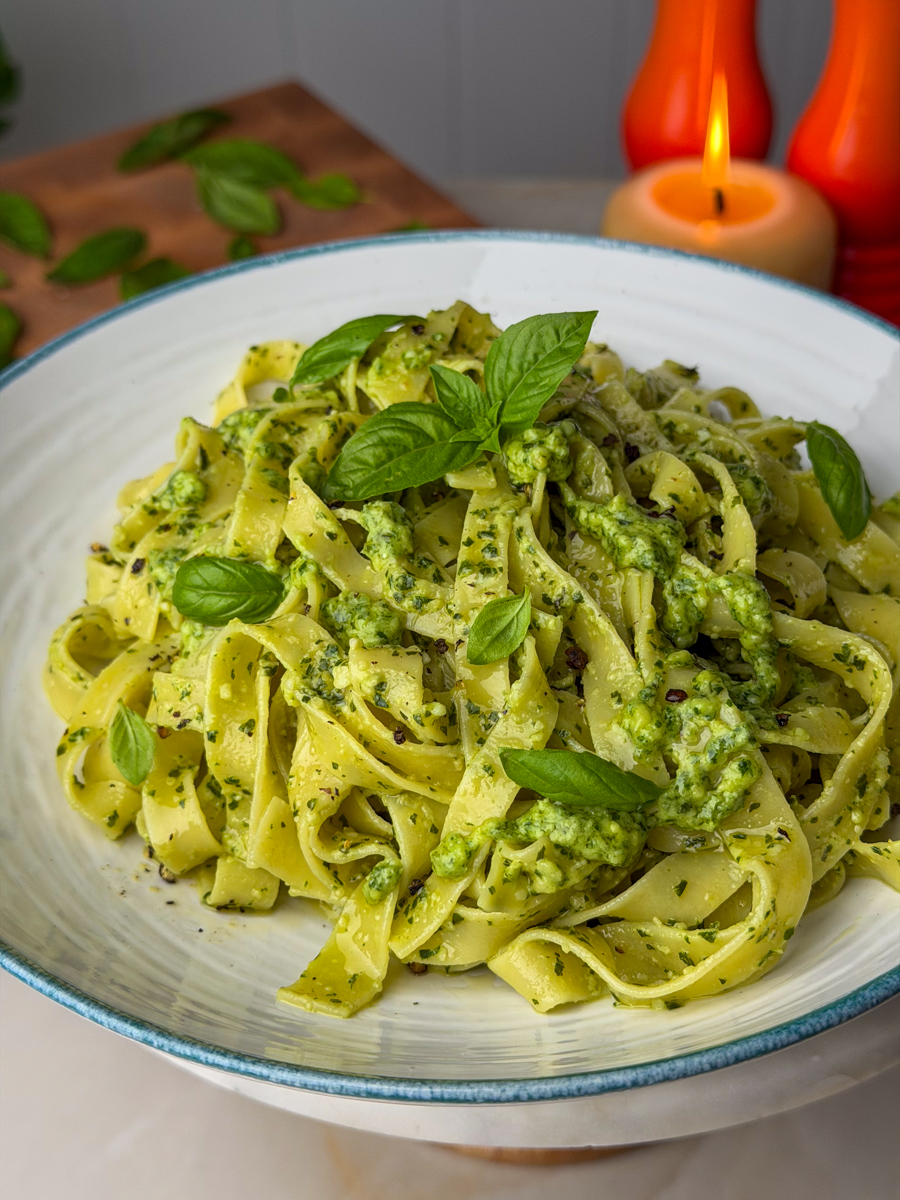
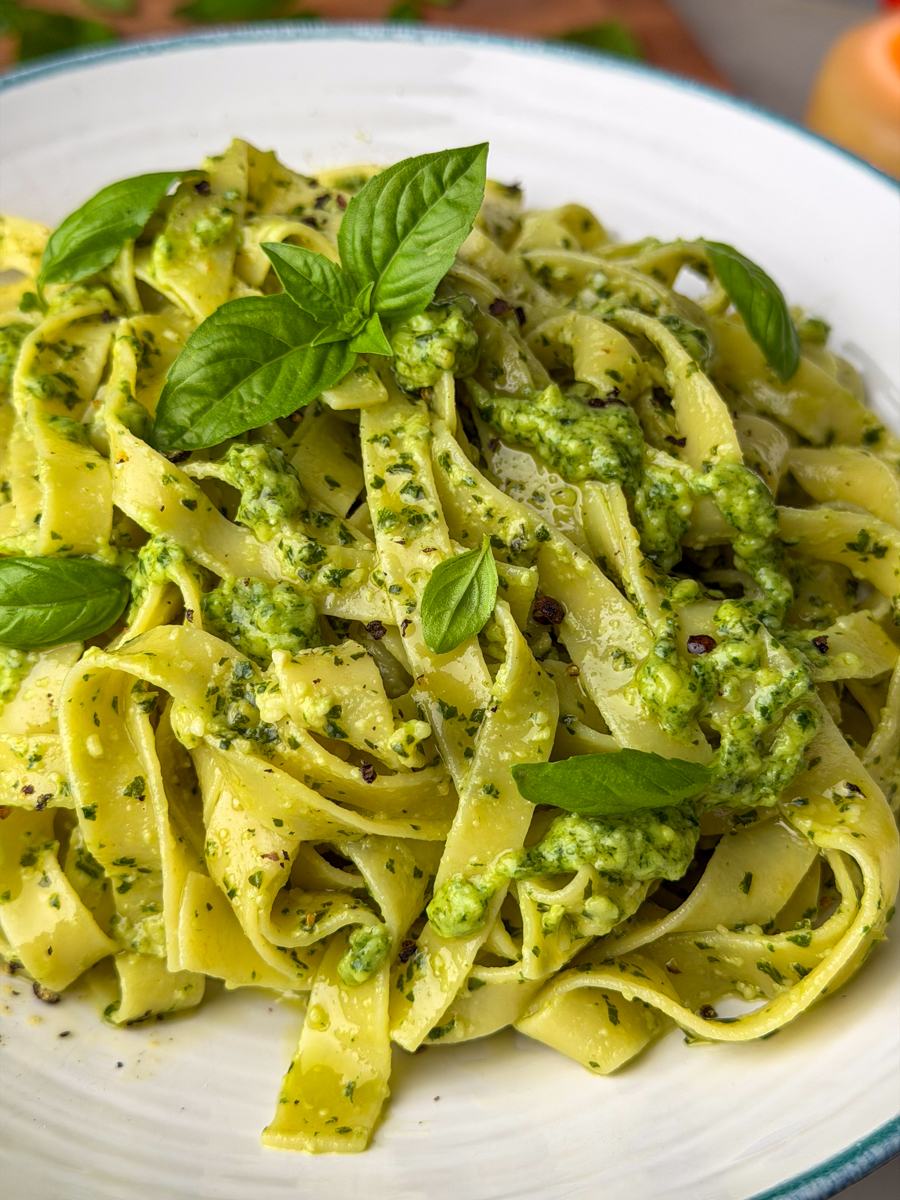
How much pasta does one batch of pesto sauce cover? This batch generously sauces about 1 pound of pasta, which serves 4–6 people. Always reserve a cup of starchy pasta water and add it a splash at a time — it loosens the pesto and helps it cling to every noodle.
Can I use pre-grated parmesan cheese? Freshly grated is much better — the bagged stuff is coated in anti-caking agents that keep it from melting smoothly into the sauce. If pre-grated is what you have, it'll still taste good, just avoid the powdery shelf-stable kind in the green can.
What can I use pesto sauce for besides pasta? Pesto is incredible on sandwiches, pizza, roasted vegetables, eggs, grain bowls and grilled chicken. My favourite lazy use is stirring a spoonful into scrambled eggs, and it also makes a great base for a salad dressing when you thin it out with a little extra lemon and olive oil.
Why does my pesto taste bitter? Bitterness usually comes from over-processing the olive oil or from bruised basil. Blending oil at high speed for too long releases bitter compounds, which is exactly why this recipe streams the oil in gradually — pulse rather than run the processor non-stop once the oil goes in.
Looking for other recipes like this? Try these:
Related
Pairing
These are my favorite desserts to serve after this recipe:


Leave a Reply