
If you’re stuck inside on a cold fall day, this butternut squash ravioli is the perfect cozy project. Making both the pasta and filling from scratch takes some time, but it’s so fun! Your kitchen will smell amazing from the roasted squash and sage, and crafting each little ravioli is super satisfying. Totally worth it!

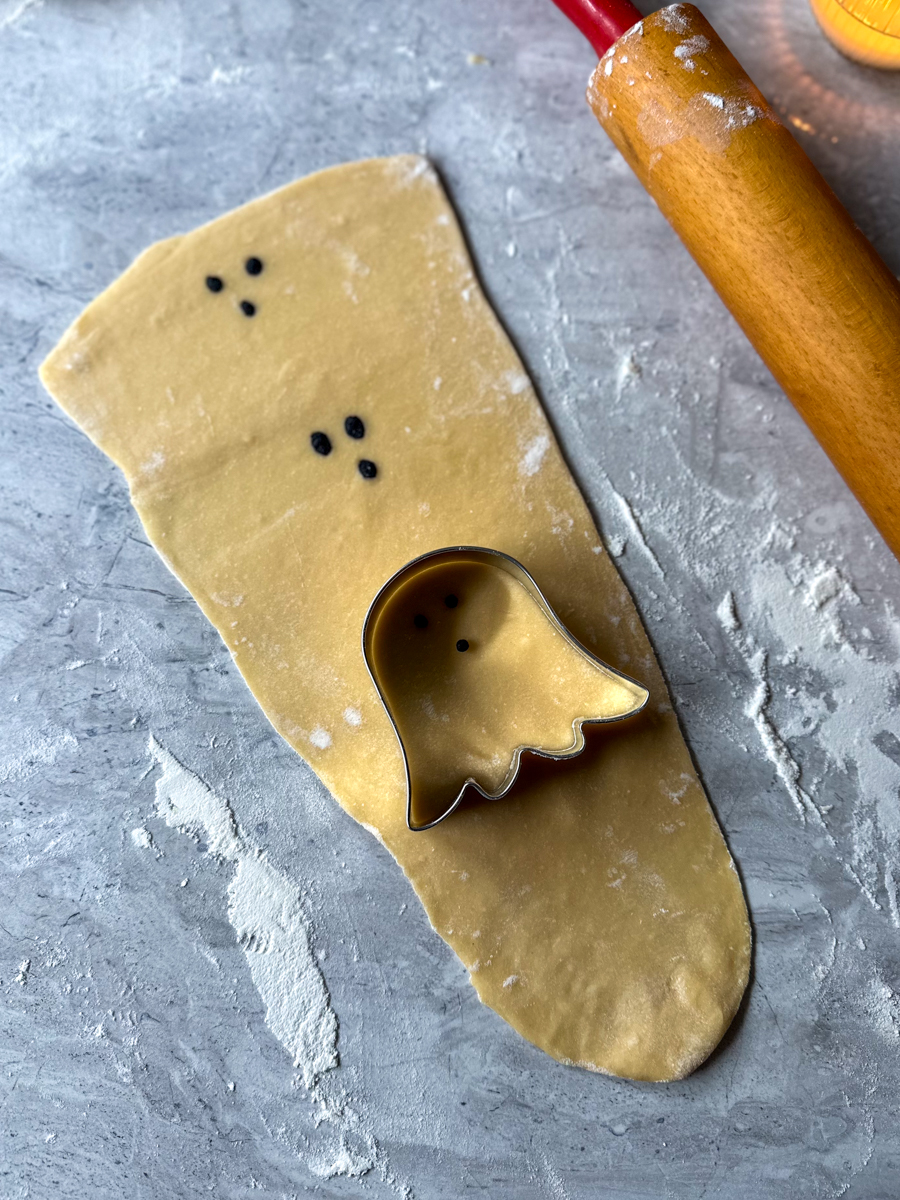
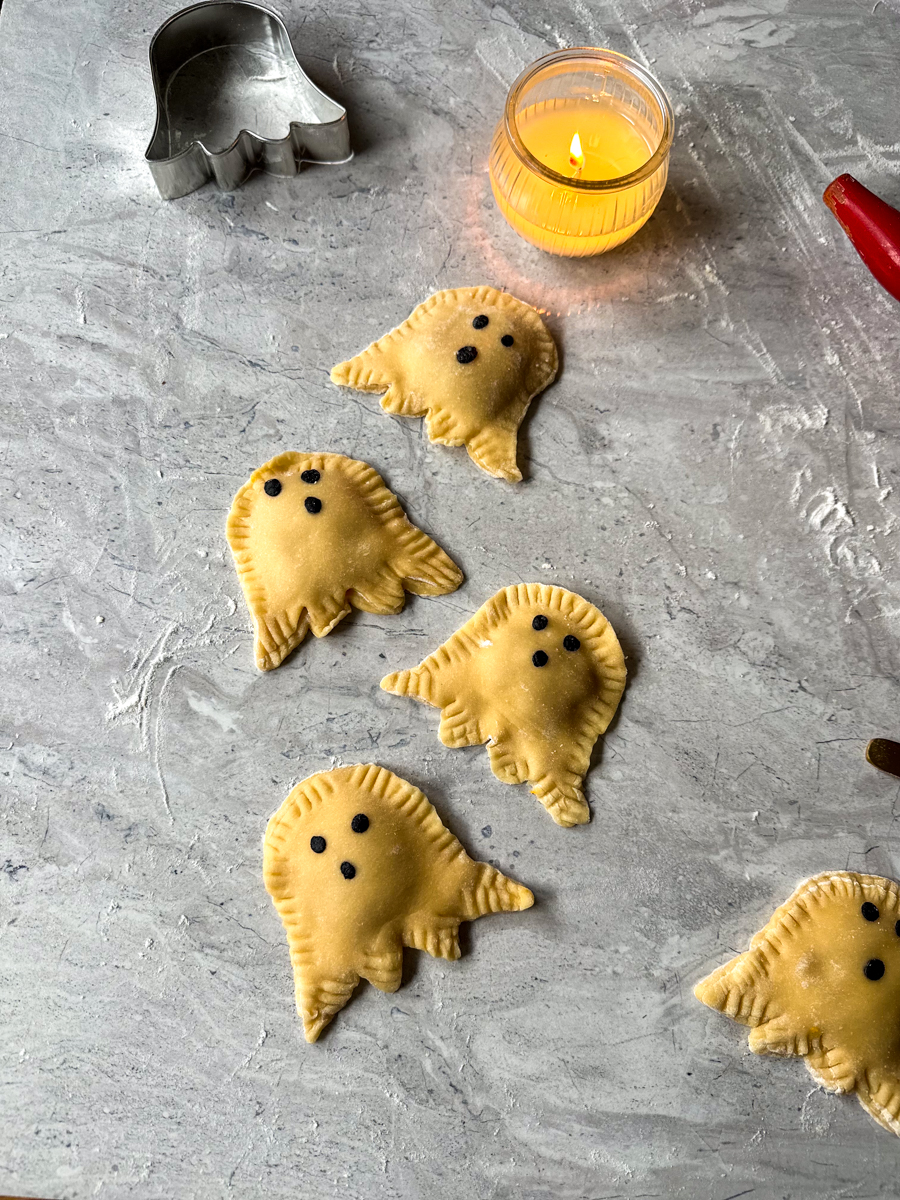
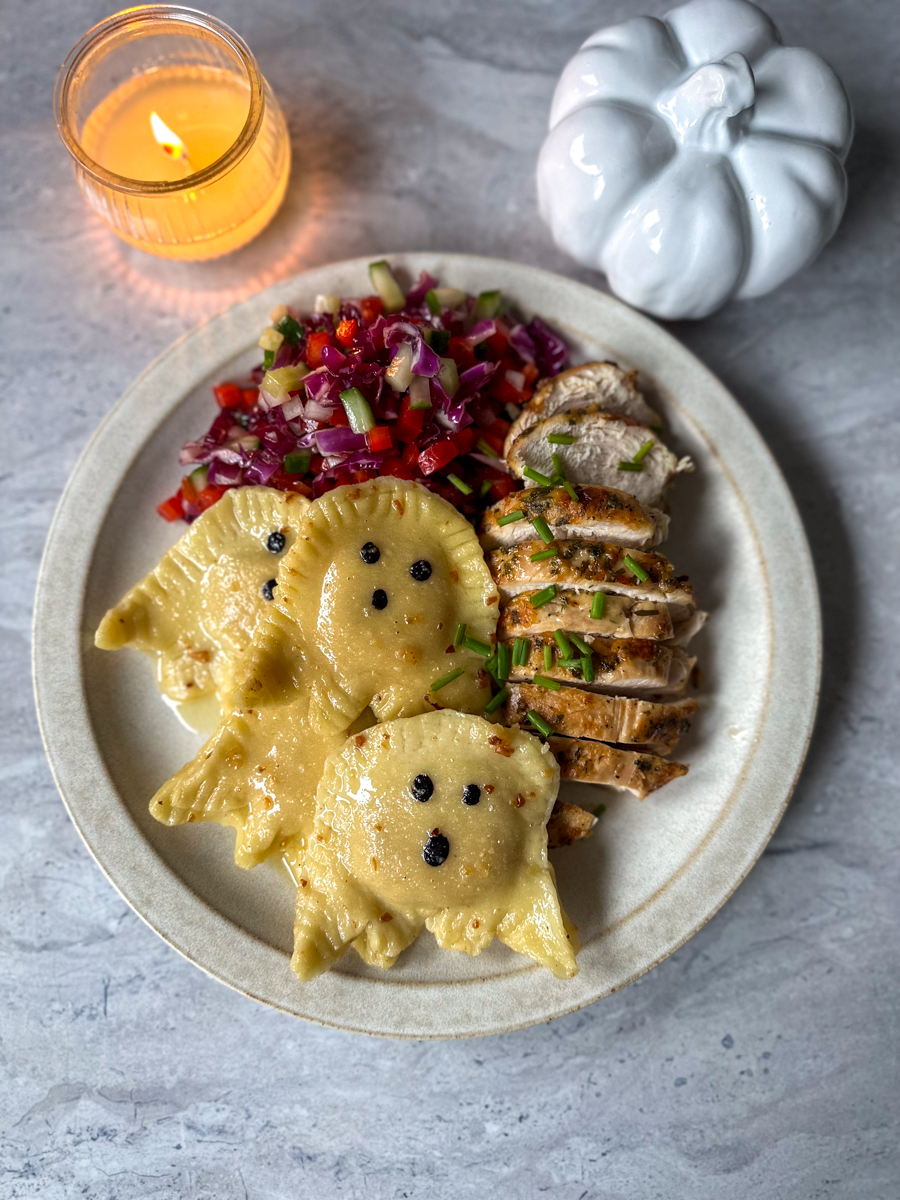
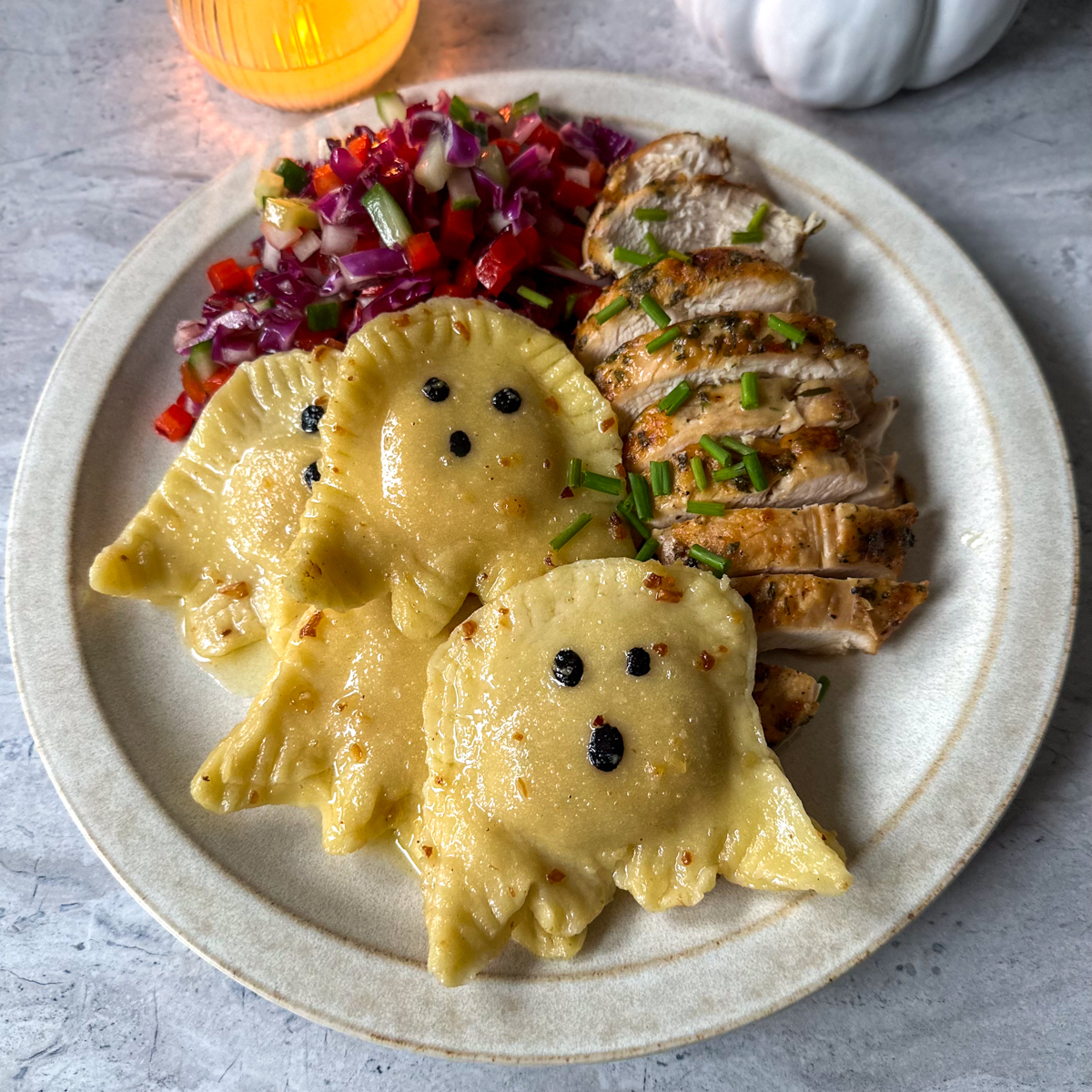
I also love making these into little ghost shapes for halloween season!
If you love quick & savoury meals, you are also gonna love my: Marry Me Chicken Pasta Recipe, Creamy Shrimp Linguine & Creamier Carbonara!
Jump to:
Ingredients
- Butternut Squash
- Onion
- Olive Oil
- Brown Sugar
- Parmesan Cheese
- Flour
- Eggs
- Unsalted Butter
- Fresh Sage Leaves
- Lemon Juice
See recipe card for quantities.
Instructions
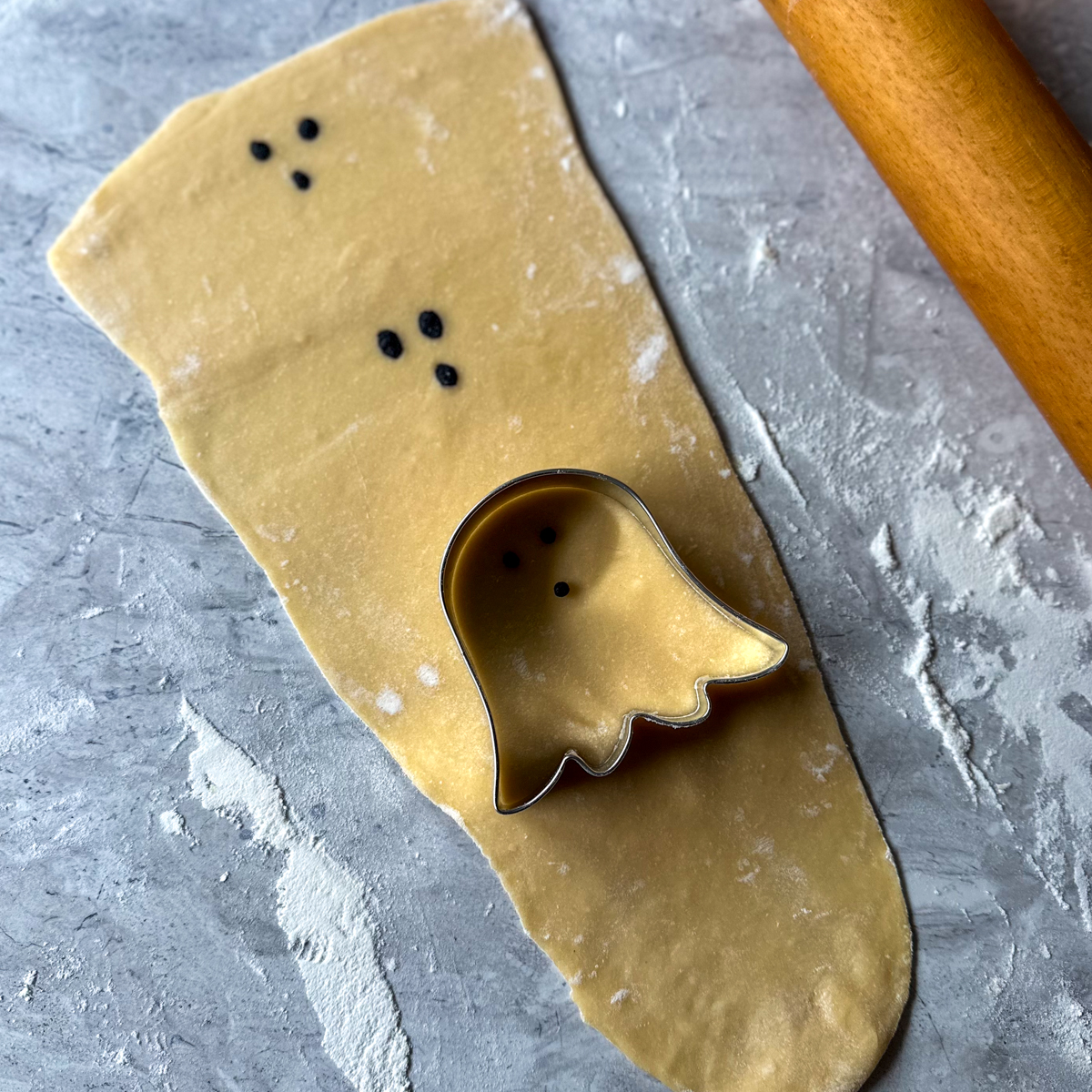
Make pasta dough & cut up ghosts.

Fill them with butternut squash filling.

Seal the ravioli filling with a fork.
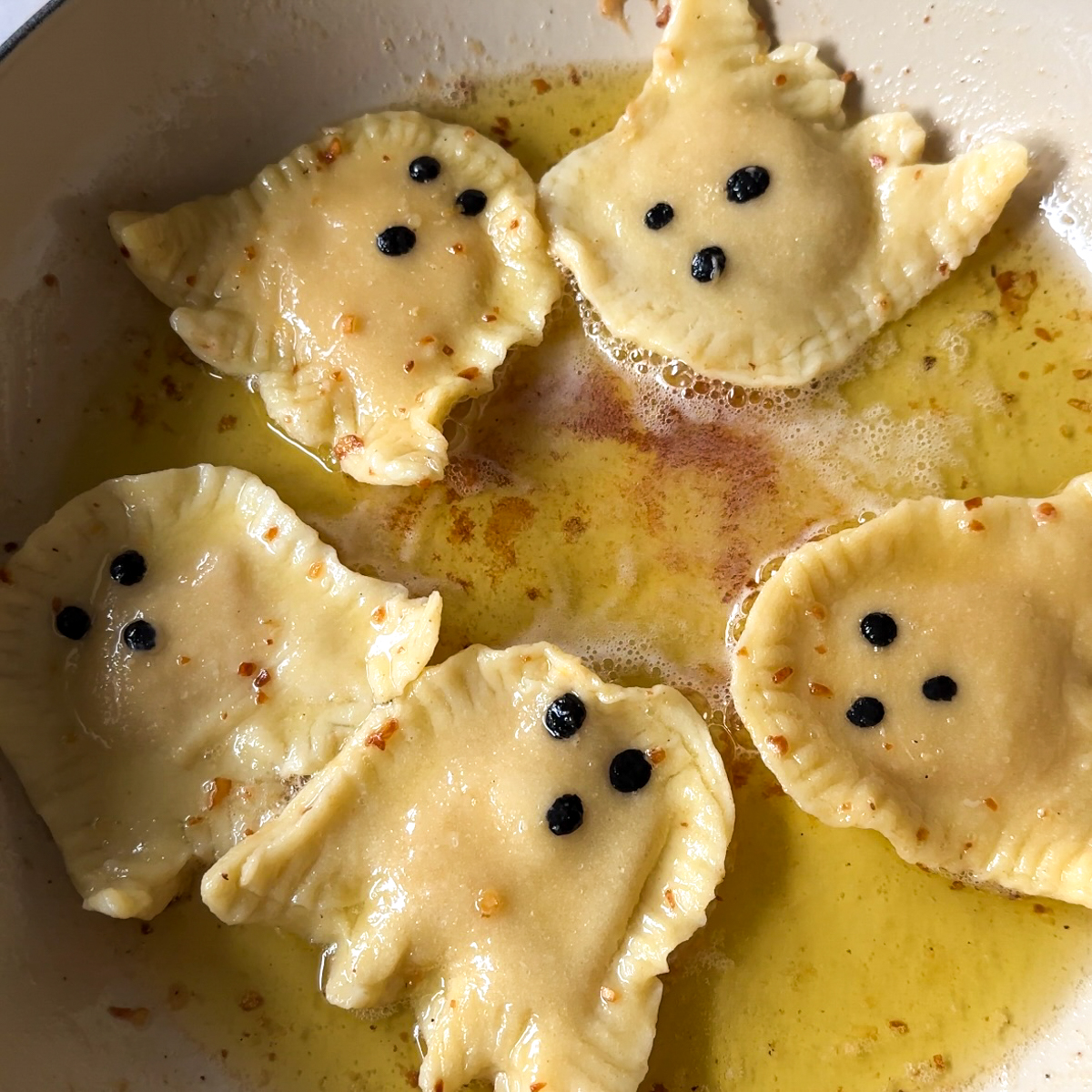
Toss them in the butter sauce.
1. Prepare the Squash Filling:
- Preheat oven to 425°F (220°C). Toss butternut squash, onion, garlic, olive oil, salt, and pepper on a baking sheet.
- Roast for 30 minutes until tender. Let cool, then blend with brown sugar and Parmesan until smooth. Chill.
2. Make the Pasta Dough:
- In a food processor, combine flour, eggs, and olive oil. Pulse into a ball, wrap, and refrigerate for 30 minutes.
- Roll dough into thin sheets.
3. Assemble Ravioli:
- Lay one sheet of dough over an ice cube tray, press down, and fill each cavity with the squash mixture.
- Cover with another sheet, seal, and cut the ravioli. Cook in salted boiling water for 2-3 minutes.
4. Make the Sauce:
- Brown butter with sage in a skillet. Add lemon juice, season with salt, and swirl in extra butter.
- Toss the cooked ravioli in the sauce and serve with Parmesan.
Substitutions
- Butternut Squash: Sweet potato, pumpkin, or acorn squash
- Onion: Shallots, leeks, or green onions
- Olive Oil: Avocado oil, coconut oil, or vegetable oil
- Brown Sugar: Maple syrup, honey, or coconut sugar
- Parmesan Cheese: Pecorino Romano, Asiago, or nutritional yeast (for a dairy-free option)
- Flour: Almond flour, spelt flour, or gluten-free flour blend
- Eggs: Flaxseed or chia seed "eggs" (1 tablespoon ground flax/chia + 3 tablespoon water), or store-bought egg replacer
- Unsalted Butter: Coconut oil, ghee, or margarine
- Fresh Sage Leaves: Dried sage (use less), rosemary, or thyme
- Lemon Juice: Lime juice, white wine vinegar, or apple cider vinegar
Equipment
- Knife & Cutting Board
- Baking Tray & Baking Paper
- Food Processor
Storage
Store uncooked ravioli on a parchment-lined tray in the freezer until firm, then transfer to an airtight container or freezer bag for up to 2 months. Cooked ravioli can be refrigerated in an airtight container for up to 3 days. The sage brown butter sauce can be refrigerated separately for 3-4 days.
Top tips for Success
- Chill the Filling: Make sure the squash filling is completely cooled before assembling the ravioli to prevent leaks.
- Thin Pasta Sheets: Roll the pasta dough as thin as possible to ensure delicate ravioli that cooks evenly.
- Brown the Butter Properly: Watch the butter closely while browning to achieve a nutty, golden flavor without burning it.
FAQs
Yes, you can make the ravioli ahead and freeze it. Lay the uncooked ravioli on a baking sheet to freeze, then transfer to an airtight container for up to 2 months.
A sage brown butter sauce is a classic pairing, but you can also try a creamy Alfredo sauce or a light tomato-based sauce.
Ensure the edges are sealed tightly and don’t overcrowd the pot. Boil the ravioli in small batches and remove them once they float to the surface.
Related
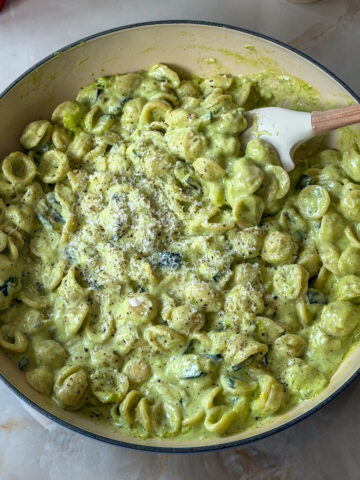
Looking for other quick recipes like this? Try these:
Pairing
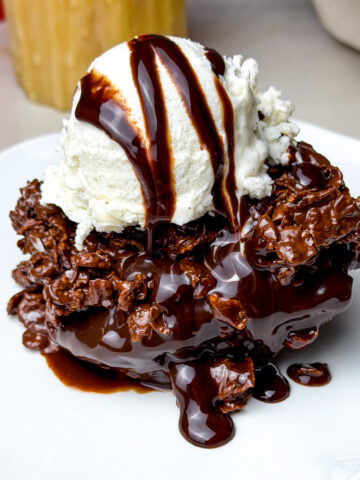
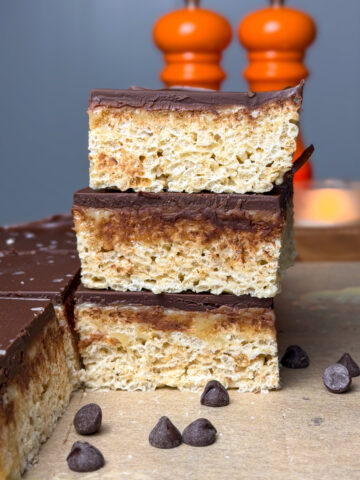
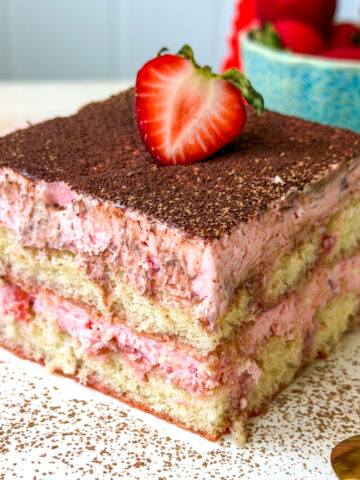
These are my favorite desserts to serve after this butternut squash ravioli:

Butternut Squash Ravioli Recipe (Easy)
Ingredients
Equipment
Method
- Preheat your oven to 425°F (220°C).
- Spread the diced butternut squash, chopped onion, and whole garlic cloves on a baking sheet. Drizzle with olive oil, and season with 2 teaspoons salt and 1 teaspoon pepper. Toss everything until well coated.
- Roast for about 30 minutes or until the squash is golden brown and tender.
- Let the squash cool for 1-2 hours.
- Transfer the cooled squash, brown sugar, and Parmesan cheese to a food processor. Pulse until smooth. Chill the filling to prevent leaks when making the ravioli.
- In the cleaned food processor, combine the flour, eggs, and olive oil. Pulse until the dough comes together into a ball.
- Remove the dough, wrap it in plastic wrap, and refrigerate for 30 minutes to rest.
- Once chilled, cut a small portion (about 2 oz) from the dough and roll it out into thin sheets, ensuring they are large enough to cover an ice cube tray.
- Drape one sheet of dough over an empty ice cube tray and press gently into each cavity.
- Fill each cavity with 1 tablespoon of the chilled butternut squash filling.
- Lay a second sheet of pasta over the filled sheet, pressing down around the edges to seal the ravioli.
- Flip the ice cube tray over to release the ravioli and trim any excess dough.
- Use a knife or cutter to separate the individual raviolis.
- Note: If making ghost-shaped ravioli (optional), see note below.
- In a large pot of salted boiling water, gently place a few raviolis at a time. Cook for 2-3 minutes, until they float to the surface and firm up slightly.
- Remove with a slotted spoon and set aside while you cook the remaining raviolis.
- In a large skillet, melt 3 tablespoons of butter over medium heat. Add the sage leaves and cook until the butter is deeply browned and the sage is crispy.
- Turn off the heat, stir in the lemon juice, and season with salt.
- Add the remaining 2 tablespoons of chilled butter to thicken the sauce.
- Gently toss the cooked ravioli in the sauce, coating them evenly.
- Plate the ravioli and drizzle with the sage brown butter sauce. Sprinkle with the additional Parmesan cheese and enjoy!
Notes
Tried this recipe?
Let us know how it was!Food safety
- Don't leave food sitting out at room temperature for extended periods
- Never leave cooking food unattended
- Use oils with high smoking point to avoid harmful compounds
- Always have good ventilation when using a gas stove
See more guidelines at USDA.gov.

Leave a Reply